


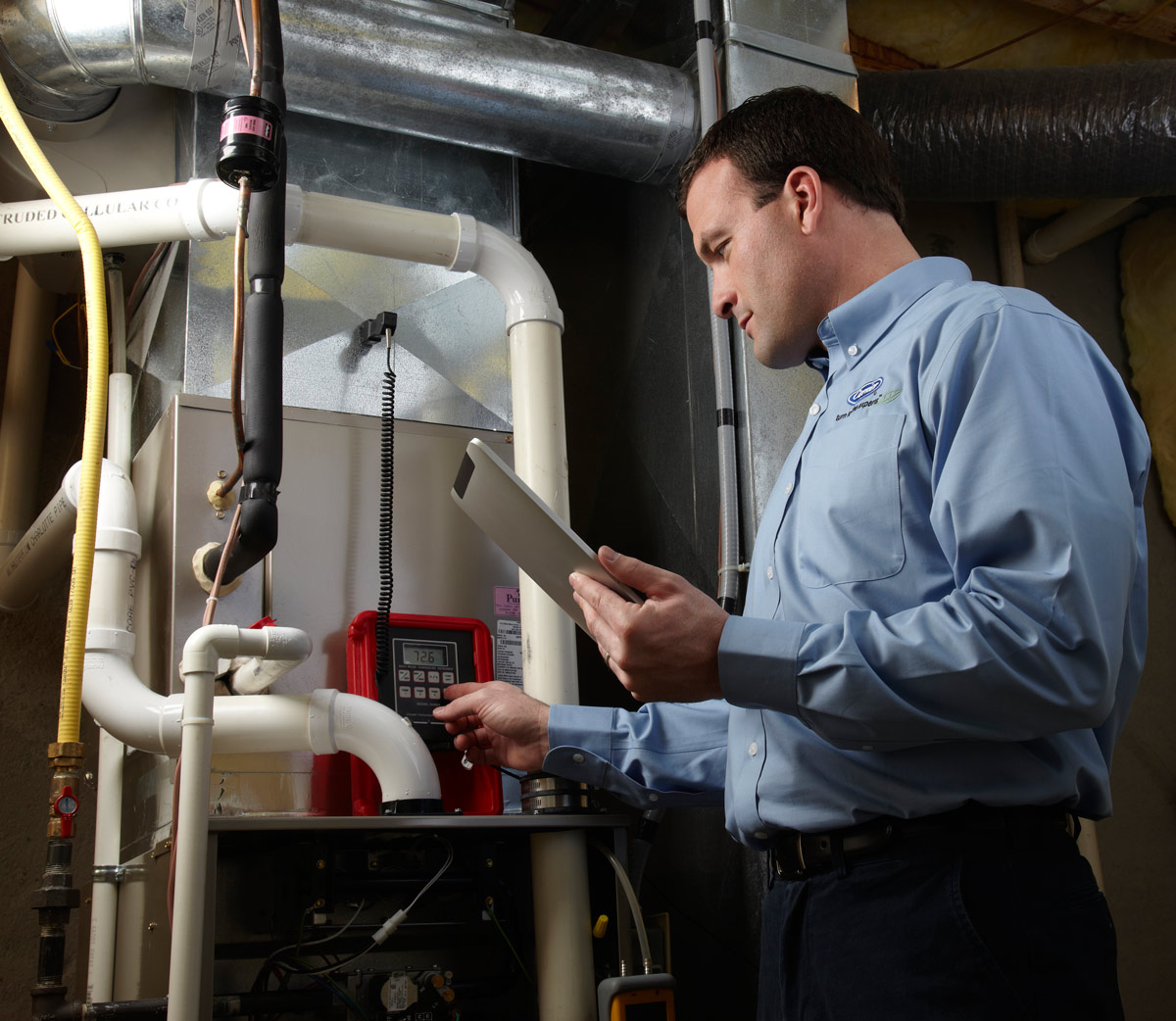
Few things are more frustrating on a cold morning than turning on your furnace and feeling nothing but cold air blowing from the vents. While it might seem alarming, this is actually one of the most common furnace complaints homeowners report – and in many cases, the cause is something straightforward.
This guide walks through the most common reasons a furnace blows cold air, what you can check yourself, and when it’s time to call a professional.
Why Is My Furnace Blowing Cold Air Instead of Heat?
Yes, in some cases. When your furnace first starts up, it takes a few moments for the heat exchanger to warm up before warm air begins circulating. If your furnace blows slightly cool air for the first 30–60 seconds and then warms up, that’s normal operation.
However, if cold air continues throughout the entire cycle, something is wrong and needs attention.
Top Reasons Your Furnace Is Blowing Cold Air
1. Thermostat Settings or Malfunction
The simplest and most common cause. If your thermostat fan setting is switched to “On” instead of “Auto,” the blower will run continuously – even when the furnace isn’t actively heating – pushing out cold air between heating cycles.
What to check:
- Confirm the fan is set to “Auto,” not “On”
- Verify the thermostat is set to “Heat” mode
- Check that the temperature setting is higher than the current room temperature
- Replace thermostat batteries if it’s battery-powered
2. Dirty or Clogged Air Filter
A clogged filter restricts airflow, which can cause the heat exchanger to overheat and trigger a safety shutoff. When this happens, the blower may continue running while the burners shut down, resulting in cold air.
What to check:
- Inspect the filter and replace it if it looks dirty or gray
- Filters should generally be replaced every 1–3 months, depending on usage and household factors like pets
3. Pilot Light or Ignition Issues
For older furnace models, a pilot light that has gone out means the burners can’t ignite, so only cold air circulates. Newer furnaces use electronic ignition systems, which can also fail due to a faulty sensor or control board.
Signs of this issue:
- No visible flame in older pilot-light systems
- Clicking sounds without ignition
- Error codes displayed on newer furnace models
4. Faulty Flame Sensor
The flame sensor verifies that the burners have ignited properly before the heating cycle continues. If it’s dirty or malfunctioning, the furnace may shut off the gas valve as a safety precaution, cutting heat production while the blower continues running.
5. Gas Supply Problems
If the gas valve is closed, or there’s an issue with your gas supply, the furnace won’t be able to produce heat at all. This should be checked carefully, as gas-related issues can pose safety risks.
6. Clogged or Blocked Vents
Blocked supply or return vents restrict airflow and can throw off the furnace’s heating cycle, sometimes triggering safety shutoffs that result in cold air blowing through the system.
7. Overheating and Limit Switch Trips
Furnaces have a high-limit switch that shuts off the burners if internal temperatures rise too high – often due to restricted airflow from a dirty filter or blocked ducts. When this happens, the blower may keep running to cool the system down, pushing out cold air in the process.
8. Aging or Failing Furnace Components
Older furnaces are more prone to component wear, including failing igniters, control boards, and heat exchangers. If your unit is more than 15 years old and experiencing frequent issues, cold air may be a sign of a larger underlying problem.
Troubleshooting Steps You Can Try First
Before calling for repair, these basic checks can help narrow down the issue:
- Check the thermostat fan setting and mode
- Inspect and replace the air filter if dirty
- Ensure all supply and return vents remain fully open and free from any obstructions.
- Check the circuit breaker to confirm the furnace has power
- Look for a visible pilot light (on older systems)
- Restart the system by turning it off and back on after a few minutes
If cold air continues after these steps, the issue likely requires a professional diagnosis.
When to Call a Professional
Certain furnace issues shouldn’t be handled without training, particularly anything involving gas lines, ignition systems, or electrical components. You should call a licensed HVAC technician if you notice:
- A smell of gas near the furnace
- Repeated ignition failures
- Error codes on the furnace display
- The furnace short-cycling frequently
- No improvement after basic troubleshooting
Attempting to repair gas or electrical components without proper expertise can be unsafe and may void your furnace’s warranty.
Preventing Future Cold Air Issues
Regular maintenance is the best way to avoid unexpected furnace problems. A seasonal tune-up typically includes:
- Cleaning and inspecting the flame sensor and burners
- Checking the ignition system and control board
- Testing airflow and replacing filters
- Inspecting ductwork for blockages or leaks
- Verifying thermostat calibration and function
Scheduling professional maintenance before the start of each heating season helps catch small issues before they turn into cold-air emergencies.
Get Expert Furnace Repair Today
If your furnace keeps blowing cold air and basic troubleshooting hasn’t solved the problem, it’s time to bring in a professional. At Oasis Air, our experienced technicians diagnose and repair furnace issues quickly, so your home stays warm and comfortable.
Contact Oasis Air today to schedule a furnace inspection or repair and get your heating system back to full performance.